
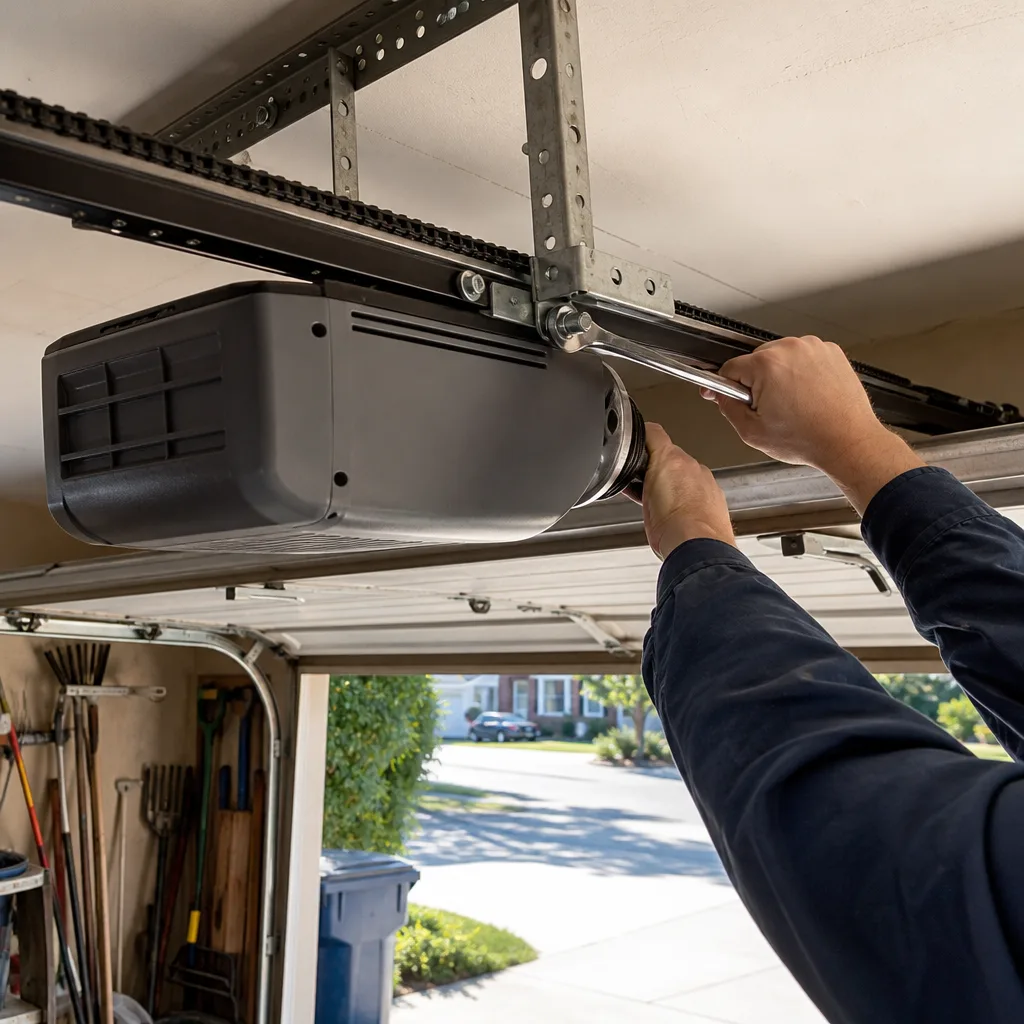
Last updated November 23, 2026
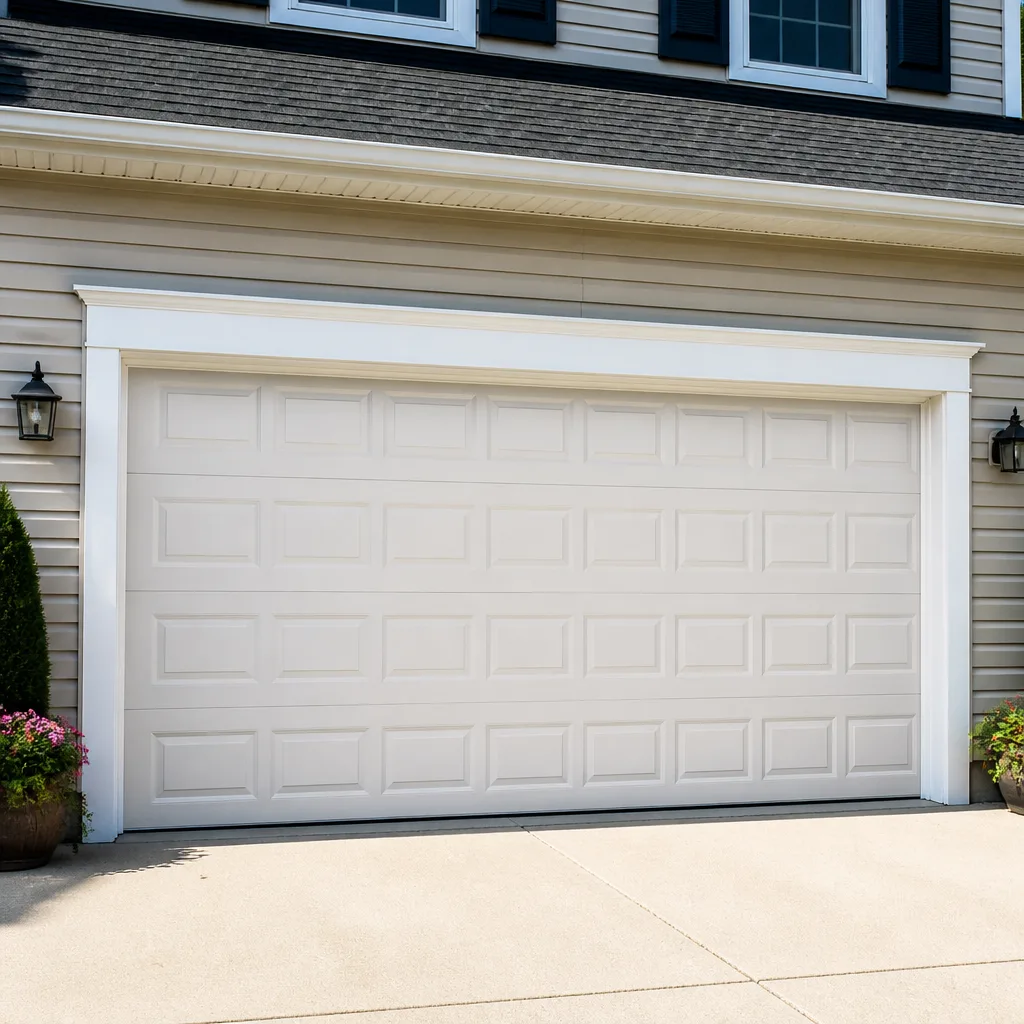 Raised-panel steel
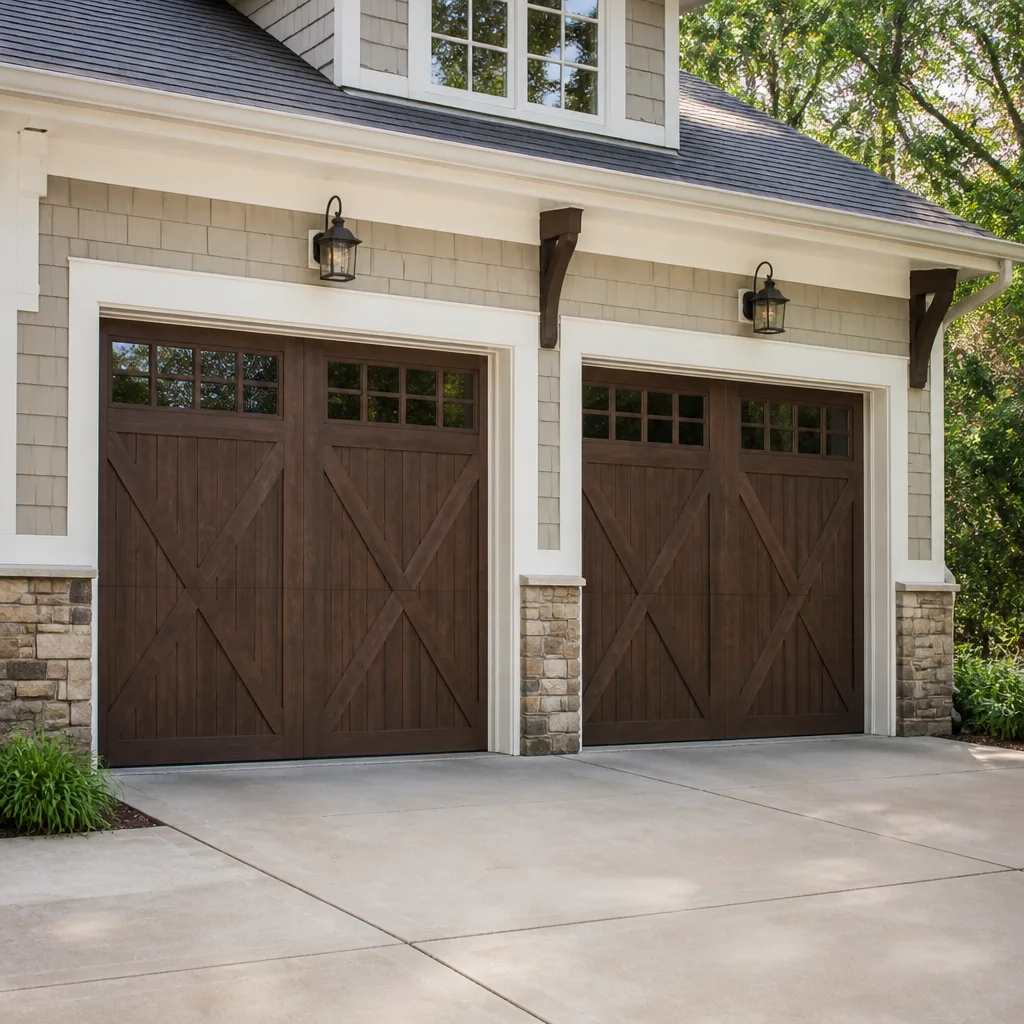 Carriage house
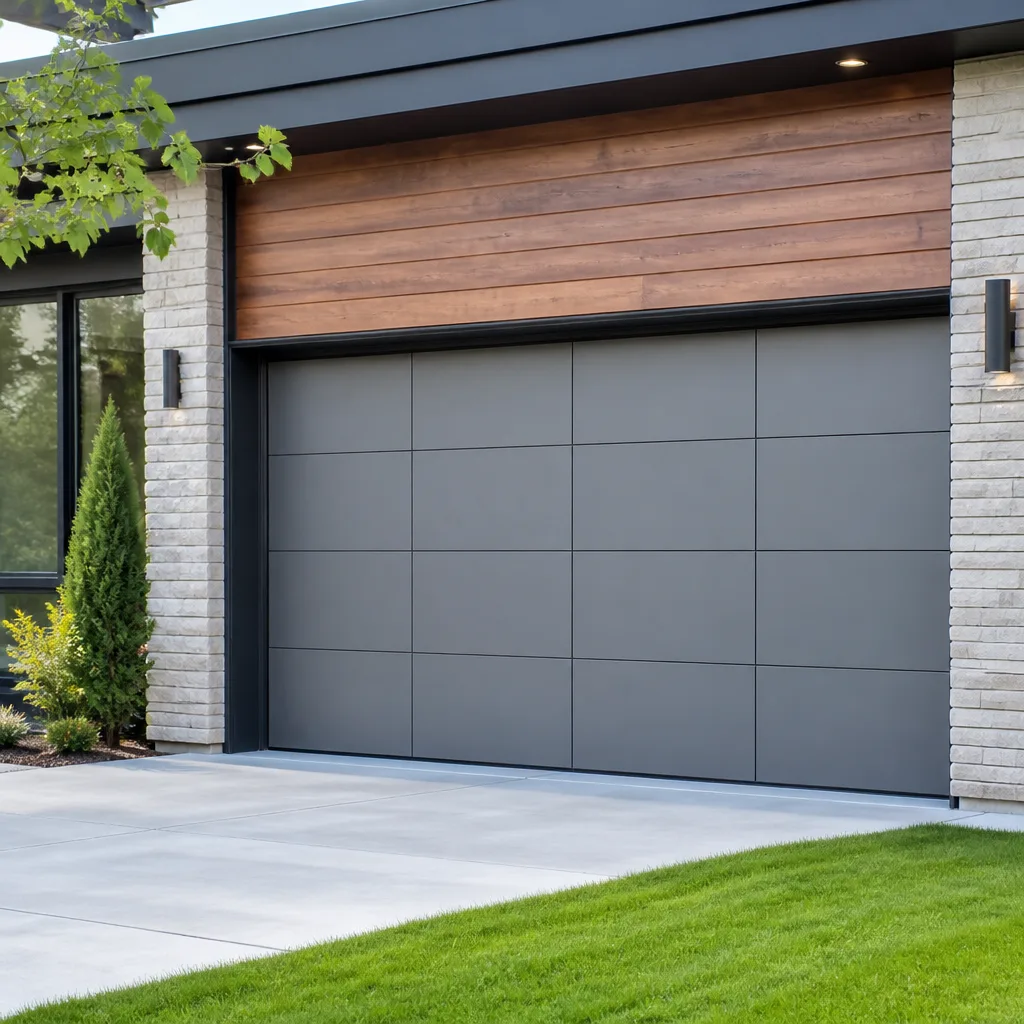 Modern flush
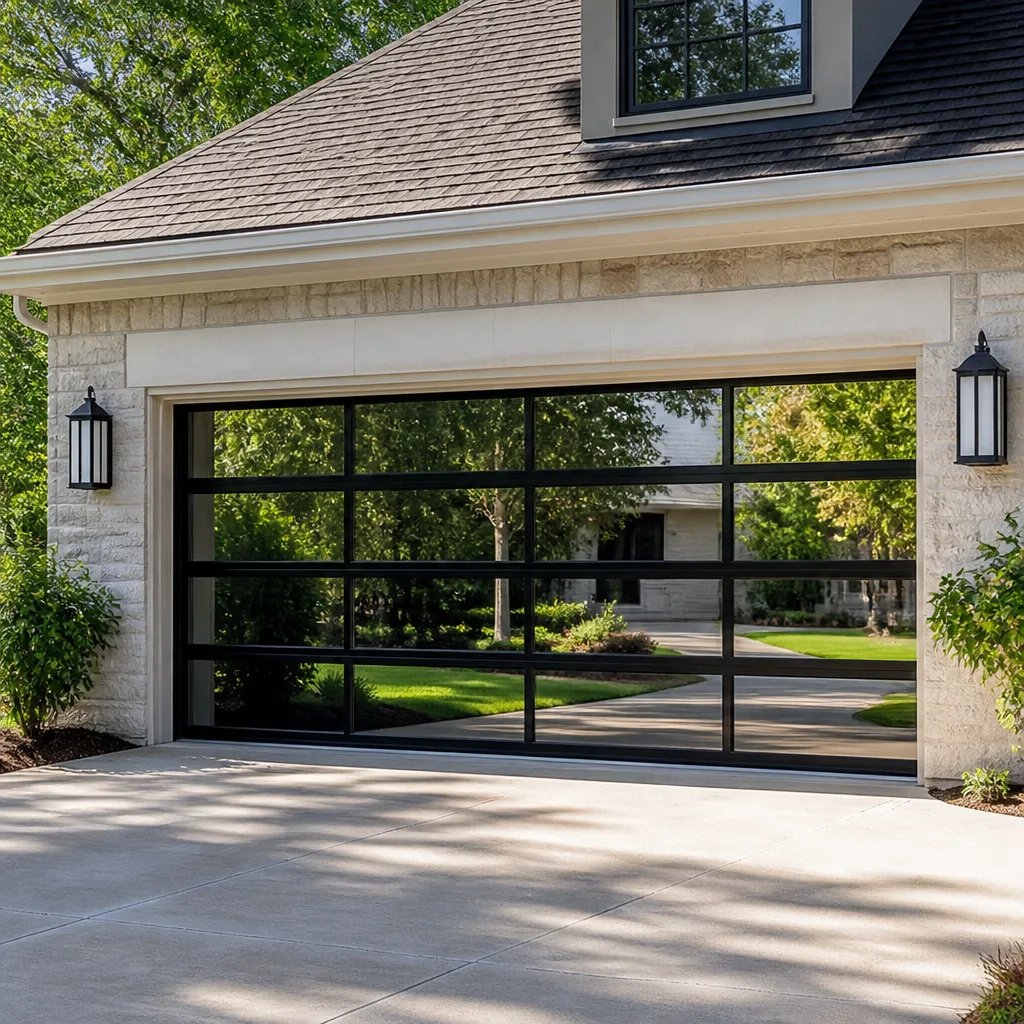 Full-view glass
 LiftMaster openers
 Chamberlain openers
Full 25-point door and opener safety check with every visit - springs, cables, rollers, tracks, and your LiftMaster or Chamberlain opener included
You get a price before we start. It does not change when the pro arrives.
Get your free estimateGarage Door Warning Signs: An Evanston Homeowner’s Reference Guide
A garage door that hesitates for two seconds before it moves isn’t “getting old.” It’s a diagnostic signal, and it points to one of three mechanical causes, each with a different urgency level and a different repair. Most warning-sign articles hand you a checklist of symptoms and stop there. This guide works backward from the actual mechanical failure, so you understand not just what you’re seeing but how much runway you have before a warning becomes an emergency. We’ve seen every one of these signals turn into a snapped spring or a fallen door, and we’ve seen plenty caught in time. Here’s how to read what your Evanston door is telling you.
Quick Answer
The most serious warning signs are a snapped torsion spring, a door that hangs unevenly, and any door that falls fast or won’t stay up. Those demand the door be left closed and a technician called before anyone uses it again. A slow opener, a noisy roller, or a remote that needs a second push are usually safe to schedule for a normal appointment, but a grinding sound, a visible cable kink, or movement that stalls partway deserves a call within a day or two. When in doubt, stop using the door and get it looked at.
Styles & brands we work with
- Raised-panel steel
- Carriage house
- Modern flush
- Full-view glass
- LiftMaster openers
- Chamberlain openers
Table of Contents
- The 12 Warning Signs and What Each One Means
- Opener Problem or Mechanical Failure? How to Tell by Sound and Movement
- Why Uneven Movement Is a Cable-Drum Warning, Not an Opener Fault
- What Each Sound Tells You About the Failing Component
- The Signs That Are Dangerous to Ignore for Even 48 Hours
- How Evanston Weather Accelerates Wear
- Warning Signs You Can Monitor Safely
- Maintenance Habits That Prevent Emergency Calls
The 12 Warning Signs and What Each One Means
Every garage door symptom traces back to a physical part that is either wearing, misaligned, or already failing. Here’s the full symptom-to-cause map, with an urgency rating for each. Monitor means you can watch it and schedule a visit. Schedule means book a repair soon. Stop using immediately means the door is a safety hazard right now.
- Door hesitates before moving. Usually a worn opener gear or a bound roller. Urgency: monitor.
- Door reverses before touching the floor. Limit switch out of adjustment or an obstruction in the safety sensor beam. Urgency: schedule.
- One side higher than the other. A stretched or slipping cable on one drum. Urgency: stop using immediately.
- Loud bang from the ceiling, door won’t lift. Torsion spring has snapped. Urgency: stop using immediately.
- Grinding or scraping as the door moves. Roller or track wear, or a dry or failing bearing. Urgency: schedule.
- Rhythmic ticking with each rotation. A failing roller bearing or a loose hinge plate. Urgency: monitor.
- Popping or snapping sound during travel. Cable jumping the drum or a hinge pulling loose. Urgency: schedule.
- Door slams down instead of lowering smoothly. Broken spring or failed opener clutch. Urgency: stop using immediately.
- Opener runs but the door doesn’t move. Stripped opener gear, broken spring, or the manual release is pulled. Urgency: schedule.
- Door only opens a few inches and stops. Limit switch setting, or a bind in the track. Urgency: schedule.
- Visible kink, fray, or slack in a cable. Cable is about to fail. Urgency: stop using immediately.
- Door won’t stay up when raised by hand. Spring tension lost. Urgency: stop using immediately.
A door that hesitates is the first clue, and it’s worth catching early. If you’re not sure which column your symptom falls into, a garage door repair visit will pinpoint it and quote the fix in writing before any work starts.
Opener Problem or Mechanical Failure? How to Tell by Sound and Movement
The single most common misdiagnosis we correct is an opener blamed for a door problem. The two are easy to tell apart once you know what to listen for, and getting it right saves you from paying for an opener that was never the issue.
An opener problem lives in the motor unit, the drive system, or the electronics. A mechanical problem lives in the springs, cables, rollers, tracks, or panels. Here’s the split:
- Opener electrical: dead remote, door reverses for no clear reason, lights blink in a pattern, motor hums but the chain doesn’t move. The door itself feels balanced and light when you release it by hand.
- Mechanical failure: the opener pulls, the motor runs, the door barely moves or wracks sideways. The door feels heavy or binds when you raise it manually. There’s a snap, bang, or grinding sound from the door, not the motor head.
There’s one test that separates them cleanly, and it doesn’t require reaching for a tool. Pull the manual release cord so the door disconnects from the opener, then lift the door by hand. A properly balanced door lifts with modest effort and stays put partway up. A door that feels like it weighs far more than it should, or that drops when you let go, has a spring or cable problem and the opener is not your culprit.
This distinction matters because opener brands and door brands fail in different ways, and a technician who knows both wastes no time. We service LiftMaster and Genie openers alongside Clopay and Amarr doors in the same call, so we’re never guessing whether a symptom belongs to the drive or the door. If the motor is the failing component, we handle garage door opener repair without sending you to a separate company.
Why Uneven Movement Is a Cable-Drum Warning, Not an Opener Fault
Homeowners consistently read an uneven door as an opener problem. It almost never is. When one side of the door rises higher than the other, the cause is almost always a cable that has stretched, slipped off the drum, or is beginning to fray on the side where the cable winds.
The logic is straightforward once you picture it. The torsion spring powers a shaft across the top of the door, and that shaft turns two drums, one at each end. Each drum holds a steel cable that wraps up to the bottom corner of the door. If one cable is even slightly off the drum, that side lags and the door twists on its way up. It’s not a motor straining; it’s an unbalanced lift.
This is the warning sign we treat most seriously, because an uneven door is a step away from a dropped panel. The cable is under high tension, and a failing cable can whip free or snap without warning. Here’s what to do if you spot it:
- Stop operating the door with the opener. Leave it closed.
- Don’t pull the manual release or try to level the door by hand.
- Don’t inspect the cable up close. Keep yourself and anything you value clear of the door.
- Call for professional service. A stretched cable means a cable and, often, a spring conversation.
This is a safety call, not a maintenance one. High-tension springs and cables are among the most hazardous parts of any residential system, and manufacturers explicitly warn against handling them without the right tools and training. Our technicians have up to 9 years of experience with exactly this kind of failure, and garage door spring repair is the work they do most.
What Each Sound Tells You About the Failing Component
A garage door is a machine with only a few moving parts, and each one fails with a distinct sound. Learn the four sounds below and you’ll diagnose most problems before a technician ever arrives. In our experience, homeowners who can describe the sound accurately get a faster, more accurate repair visit.
Grinding
Grinding points to metal-on-metal contact where there should be smooth movement. Rollers, hinges, and bearings are the usual suspects. A dry or seized bearing will grind with every rotation. Long-term grinding wears down the track and the door’s edge, so this one is worth a scheduled call before it escalates.
Popping
Popping usually signals a cable jumping off its drum or a hinge that’s pulling loose as the door travels. If the pop repeats at the same point each cycle, the cable is the more likely cause. If it happens once, a hinge has cracked or a bracket has shifted. Popping should not be monitored for long; it tends to get worse quickly.
Scraping
A sustained scrape along the cycle usually means the door is rubbing against the track or a panel is bowed out of alignment. This often follows a light impact the homeowner barely noticed, or a track that’s been knocked slightly out of square. The fix is usually a track alignment rather than a full replacement.
Rhythmic ticking
Ticking in time with the door’s travel almost always means a failing roller bearing or a loose hinge screw. It’s the least urgent of the four sounds, but it’s also the easiest to catch early, and a new set of rollers is a small job compared with the wear a failing bearing causes over time.
One more sound deserves its own note: a loud bang from the ceiling, followed by a door that won’t lift. That’s a snapped spring, and it’s an immediate stop-use call. An Evanston garage door repair visit can confirm it, but the door should stay closed until then.
The Signs That Are Dangerous to Ignore for Even 48 Hours
Not every warning sign is a maintenance item. A handful are hazards the moment they appear, and putting them off for a couple of days is how a small failure turns into a dropped door or a security gap. Here’s the short list of signals that should prompt a call the same day.
- A snapped torsion spring. The door becomes nearly impossible to lift by hand and can fall without warning. Stop using it.
- An uneven door. A cable at the point of failure can drop a panel or whip free. Leave the door closed.
- A door that slams or free-falls. The door’s weight is no longer being controlled. Immediate hazard.
- A visible cable kink or slack. Cables fail suddenly. This is a stop-use sign.
- A door that won’t stay up by hand. Spring tension is gone. Don’t raise it.
- A door that’s physically stuck open. Security and safety both suffer. This becomes an urgent call because the door is exposed and the home is exposed with it.
Each of these falls into what we think of as emergency garage door service, because the problem isn’t scheduling, it’s access and safety. A door stuck open leaves a home exposed. A door hanging at an angle is a physical hazard to anyone nearby. When one of these signs shows up, call rather than schedule. Same-day service is often possible, and the goal is a secured door before the day ends.
Safety note: if you see any of these signs, do not attempt to lift the door by hand, don’t cut or straighten a cable, and don’t reach into the track or spring assembly. These parts are under high tension and are dangerous without professional equipment. Keep people and vehicles clear and call a trained technician.
How Evanston Weather Accelerates Wear
Evanston sits on the lake, and the combination of lake-effect moisture, hard freezes, and muggy summers wears on a garage door in ways that homeowners in drier climates never see. The door is the largest moving object attached to a house, and it cycles through every temperature swing along with the building.
Cold is the biggest factor. A metal spring that contracts in a hard freeze is under different tension than the same spring on a mild afternoon, and the door that opens smoothly in October may start to hesitate in January. Wooden doors and wood-framed openings absorb moisture and swell, which throws off the track alignment. Summer humidity loosens what winter tightened, and the cycle repeats every year.
The practical takeaway for Evanston is this: expect a mechanical service every few years and listen more closely in spring and fall, when the seasonal shifts tend to expose a failing spring or a bound roller. A door that sounds fine in July can start grinding in November. Catching that early, before a freeze, is what keeps the door working through the coldest stretch. Our technicians know the local weather pattern and can tell from the symptom whether the wear is climate-driven or just component age.
Warning Signs You Can Monitor Safely
Not every symptom needs a same-day call. Some are worth watching, and being able to tell the difference is how you avoid both panic and neglect. Here’s the list of signals you can safely monitor while you plan a service call.
- Opener hesitates slightly before moving. Watch for a week; if it worsens, schedule.
- Occasional loudness in one part of the cycle. Note it and get it checked at the next maintenance visit.
- A remote that needs a second press. Often a battery, sometimes a range issue. Test with a spare remote first.
- A slight squeak or tick that comes and goes. Lubrication helps, but a technician should still look at it.
- A door light that flickers. Usually the opener’s bulb, rarely a safety sensor. Both are cheap to fix.
Monitoring means watching, not touching. A quiet squeak turning into a grind is the signal that the monitor window has closed. When that happens, call rather than wait for the next symptom.
Maintenance Habits That Prevent Emergency Calls
The homeowners who call us least are the ones who do a few simple things regularly. None of them are risky, and all of them extend the life of the door. Here’s the maintenance routine we’d suggest for any Evanston garage door.
- Test the balance once a season. Disconnect the opener and lift the door by hand. It should lift smoothly and stay partway up. If it fights you or drops, call a technician.
- Run the safety sensors test monthly. Put an object in the beam and check that the door reverses. Clean the sensor lenses.
- Lubricate rollers and hinges lightly with a product meant for garage door hardware. Don’t grease the tracks.
- Look at the springs and cables from a safe distance. You’re watching for visible rust, kinks, or a gap in a torsion spring, not touching them.
- Listen once a month. Walk to the door, open it, and listen. Any new sound is a signal.
- Clear the track area. Small objects caught in the track cause the door to bind and wear the panels.
For the broader picture of what we handle, from spring repair to opener diagnostics, visit the Evanston Garage Door Repair Co and see where your symptom fits.
Common Mistakes to Avoid
- Blaming the opener for everything. An uneven door or a door that won’t stay up is a spring or cable issue, and paying for an opener that isn’t broken is money wasted. Diagnose by hand first.
- Ignoring a slight hesitation. Two seconds of delay today is often a grind or a snap in a month. Local freeze-thaw cycles make small wear turn into big problems faster than in milder climates.
- Lubricating the tracks. Grease on the tracks causes the rollers to slide instead of roll, and the door binds. Lubricate the rollers and hinges, not the guide.
- Trying to adjust the springs yourself. Manufacturer warnings about high-tension springs exist because the parts are genuinely dangerous. This is not a weekend project.
- Cutting a frayed cable to “clean up the end.” That cable is under tension and can whip. Leave it alone and get it replaced professionally.
- Waiting for the door to fail completely. A warning sign caught early is a cheap fix; a door that comes down hard can damage the panels, the opener, and the car under it.
- Assuming a loud door just needs new rollers. Noise often traces to the opposite side of the mechanism. Get it diagnosed, not guessed.
One more local mistake: pulling the manual release to “test” the door, then leaving the opener connected in the wrong position. Make sure the door is fully closed and the opener is re-engaged before you use it again. If you’re not sure, call and we’ll walk you through it without touching the springs.
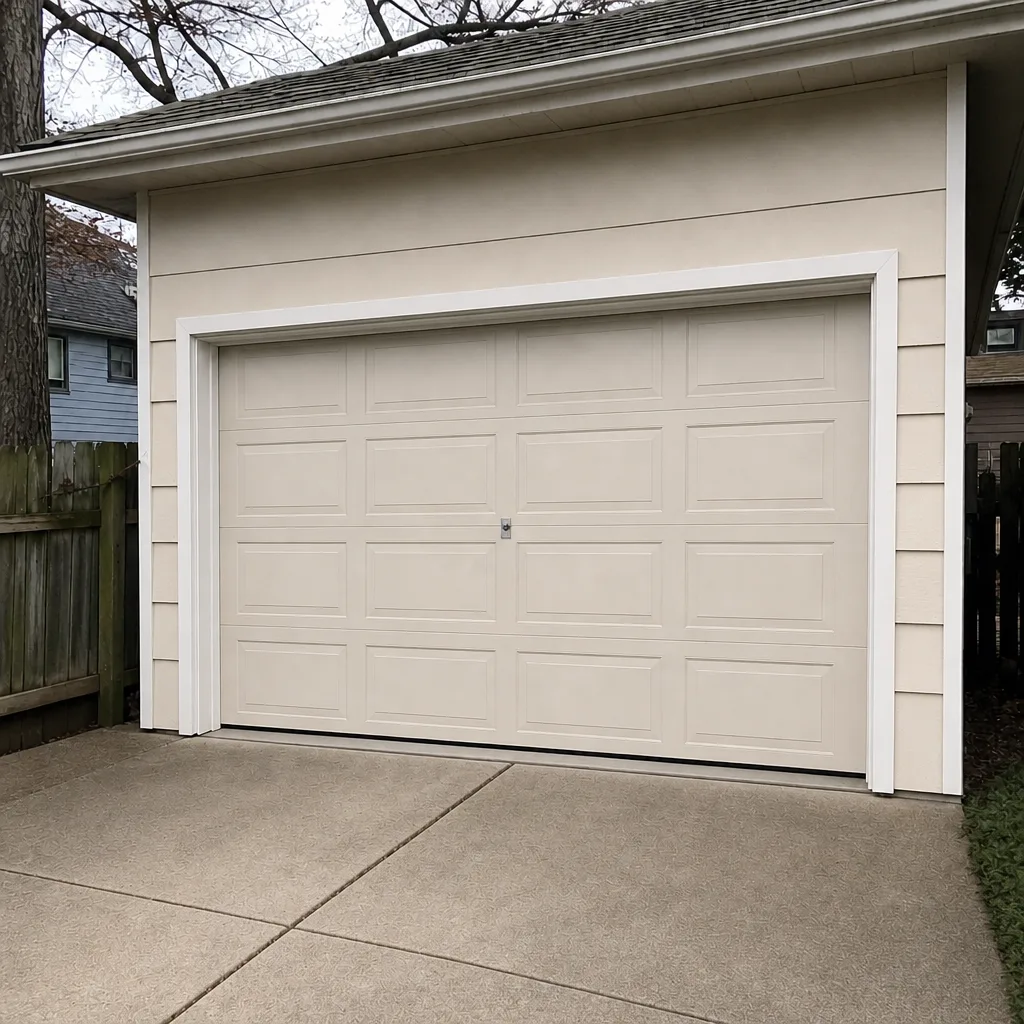
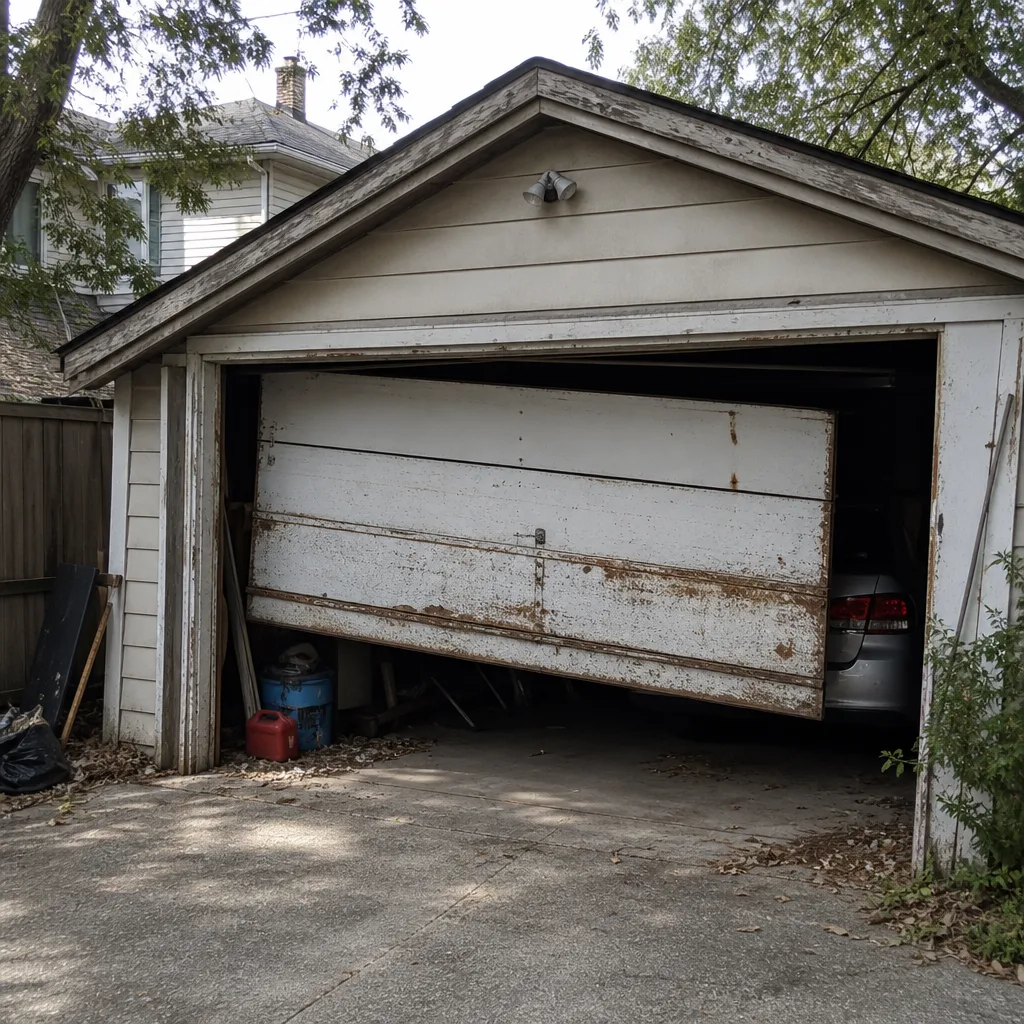
See the difference
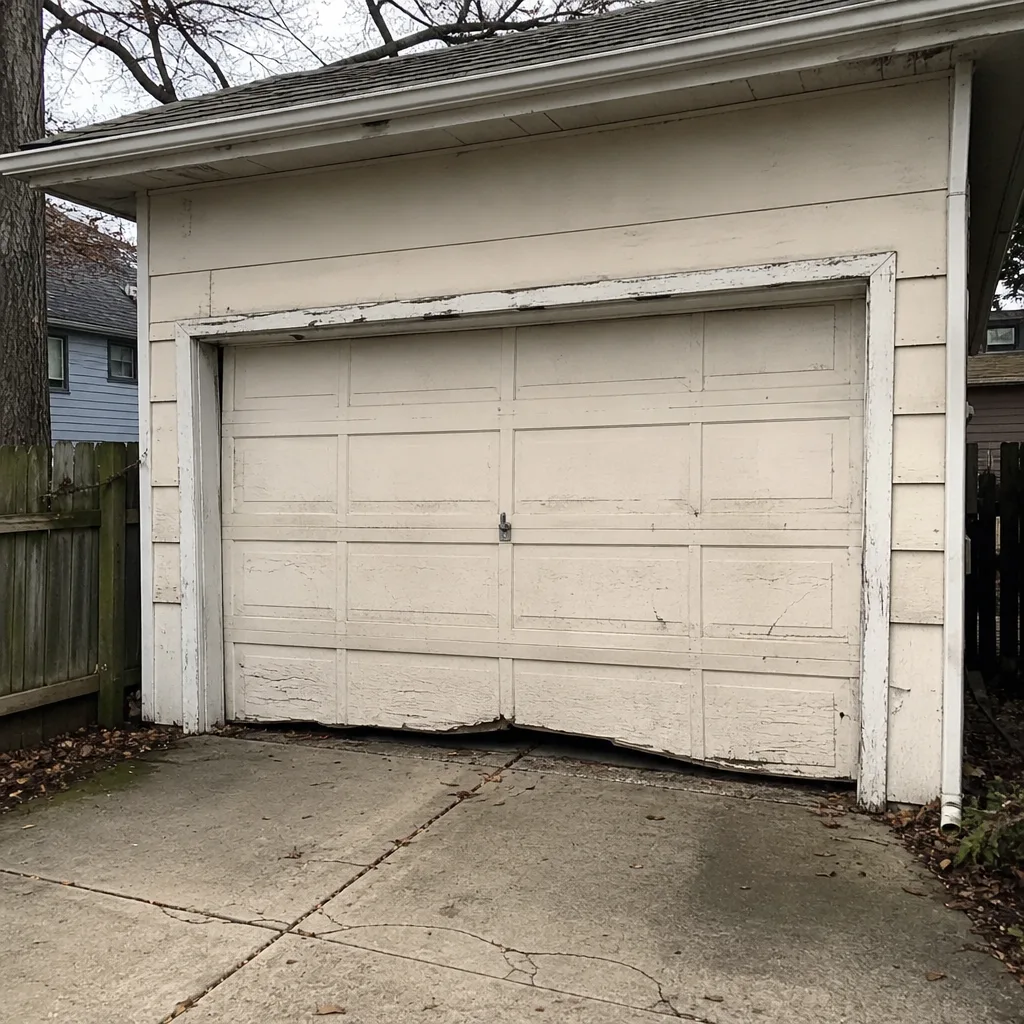 Before
 After
 Before
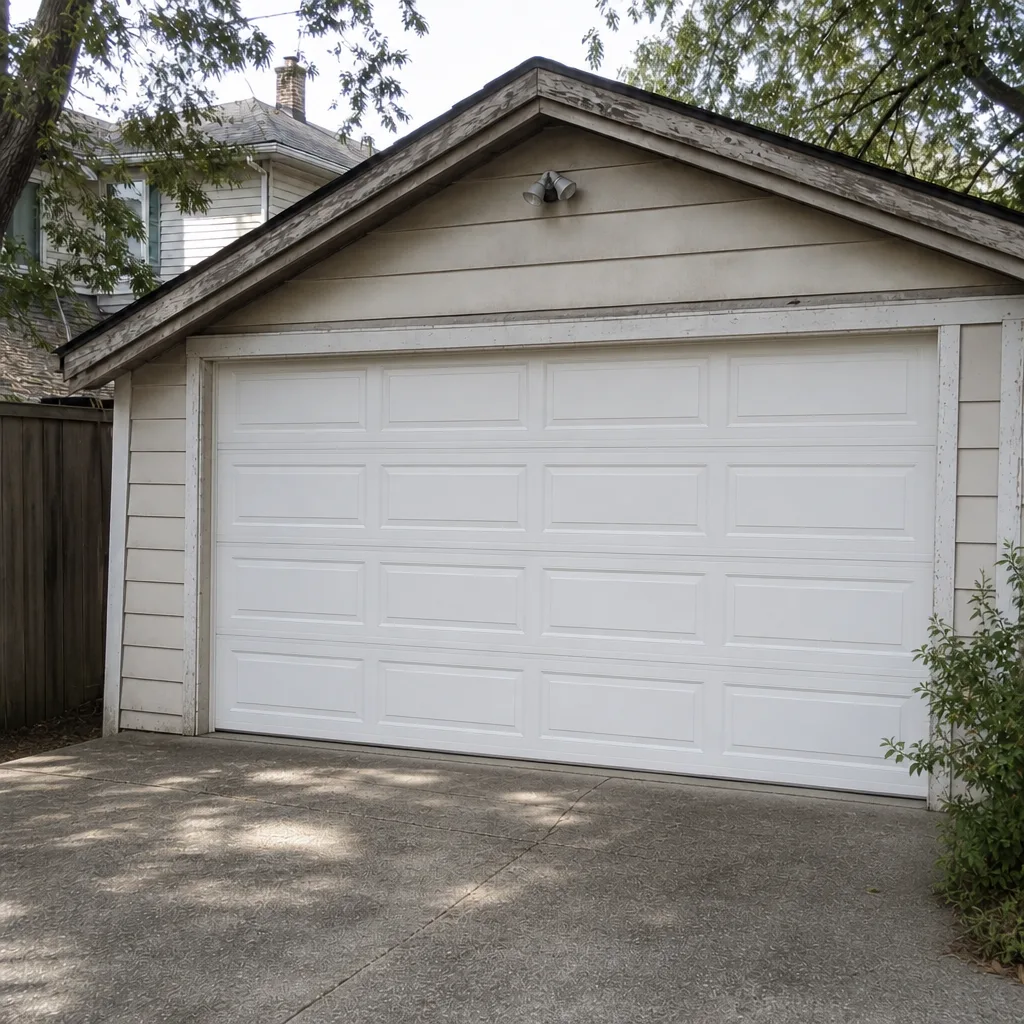 After
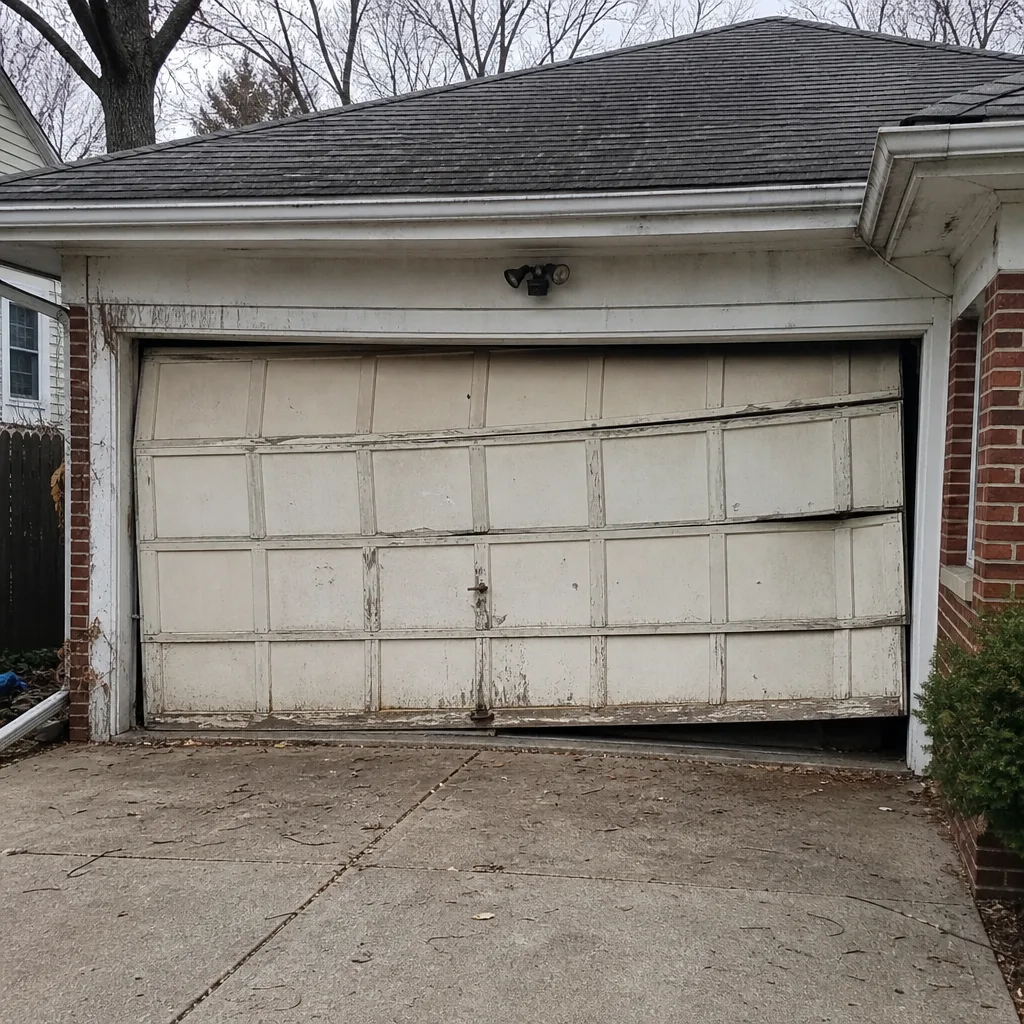 Before
 After
When to Call a Professional
Call a professional if you see a snapped spring, a door hanging unevenly, a visible cable kink, any door that slams or falls, or a door that won’t stay up by hand. Those are the signals where the risk to person or property is real today, and a trained technician should handle them. Call sooner rather than later if you hear grinding that gets worse, if the opener runs but the door doesn’t move, or if the door stalls partway through travel. Minor noise, a hesitant start, or a remote that needs a second press can wait for a scheduled visit, but even those are worth a look. Evanston Garage Door Repair Co offers free estimates in Evanston, we answer 24/7, and fast dispatch runs from 7am to 7pm Sunday through Friday. Call (877) 492-2506.
Frequently Asked Questions
A snapped torsion spring is the most serious, because the door’s weight is no longer supported and it can fall. An uneven door is close behind, since a cable is likely at fault. Either one means stop using the door and call a technician.
Not if the sign is a snapped spring, a kinked cable, an uneven door, or a door that can’t stay up. Those should be treated as same-day calls. A minor noise, a hesitant start, or a worn roller can wait for a scheduled appointment.
Disconnect the opener and lift the door by hand. If it’s easy to raise and holds partway up, the door is balanced and the opener is the likely issue. If it feels heavy or drops, the problem is in the spring or cable.
Some noise is normal when the cold tightens metal components, but a new grind, pop, or scrape is not seasonal. It points to a part that needs attention. Get it checked before the next hard freeze.
That’s almost always a cable that has stretched or slipped on its drum, not an opener fault. The uneven lift twists the door and stresses the panels. Leave the door closed and call for service.
Pricing is set per job by a written estimate, so the number depends on the component that’s failing. The estimate is free, and the quote is given and agreed before any work starts. Call (877) 492-2506 for an exact quote.
The Bottom Line
Your garage door tells you what’s failing before it fails. A hesitation, a new sound, an uneven lift, a cable that no longer looks straight: each one maps to a specific part and a specific urgency. The signs that matter most are the ones involving springs, cables, and any door that won’t stay up, and those deserve a call today rather than a wait-and-see. The rest you can monitor safely and schedule a visit before they turn into emergencies. Read the door, catch the wear early, and the door keeps working through the Evanston seasons.
If you’re seeing one of the warning signs in this guide, call (877) 492-2506 for a free estimate. We answer 24/7, and fast dispatch runs from 7am to 7pm, Sunday through Friday. The price is quoted and agreed before any work starts, and we handle both the door and the opener on one call.
Written by the team at Evanston Garage Door Repair Co.