
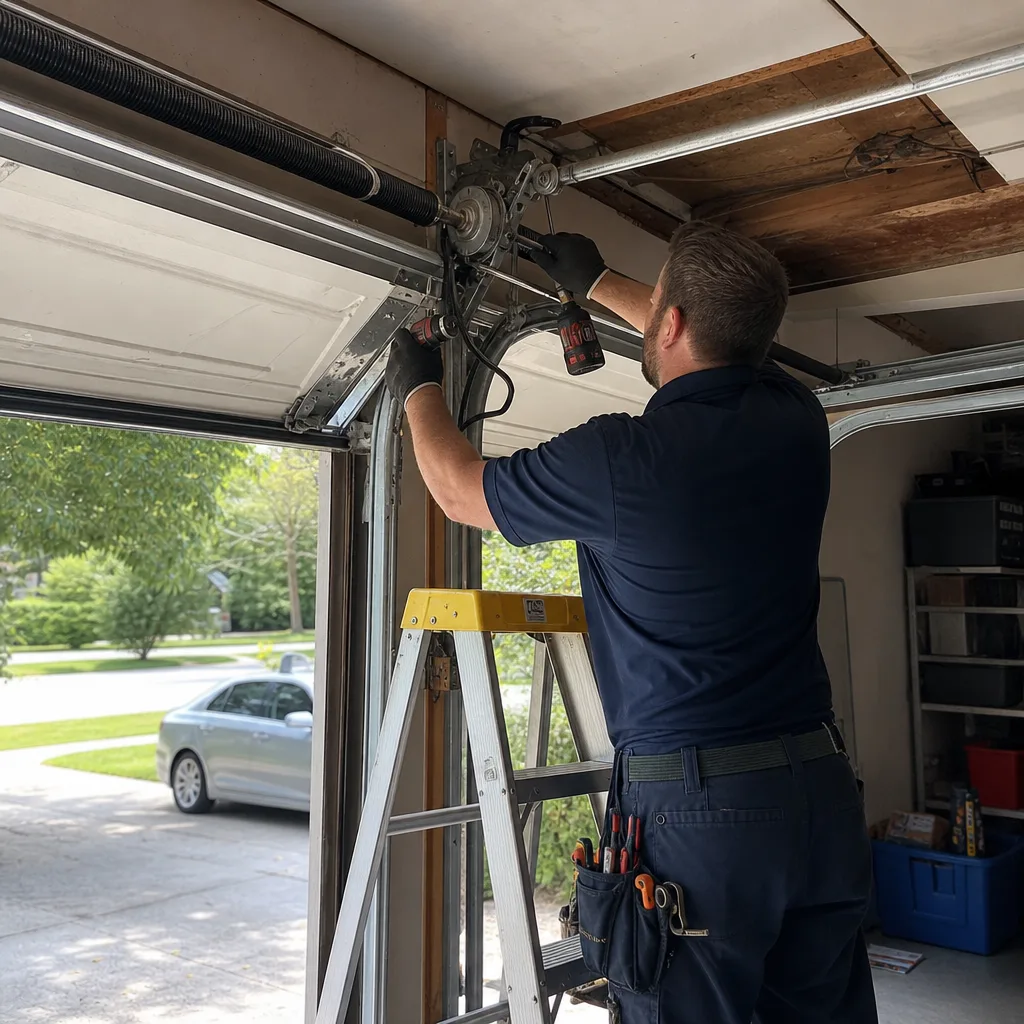
Last updated November 23, 2026
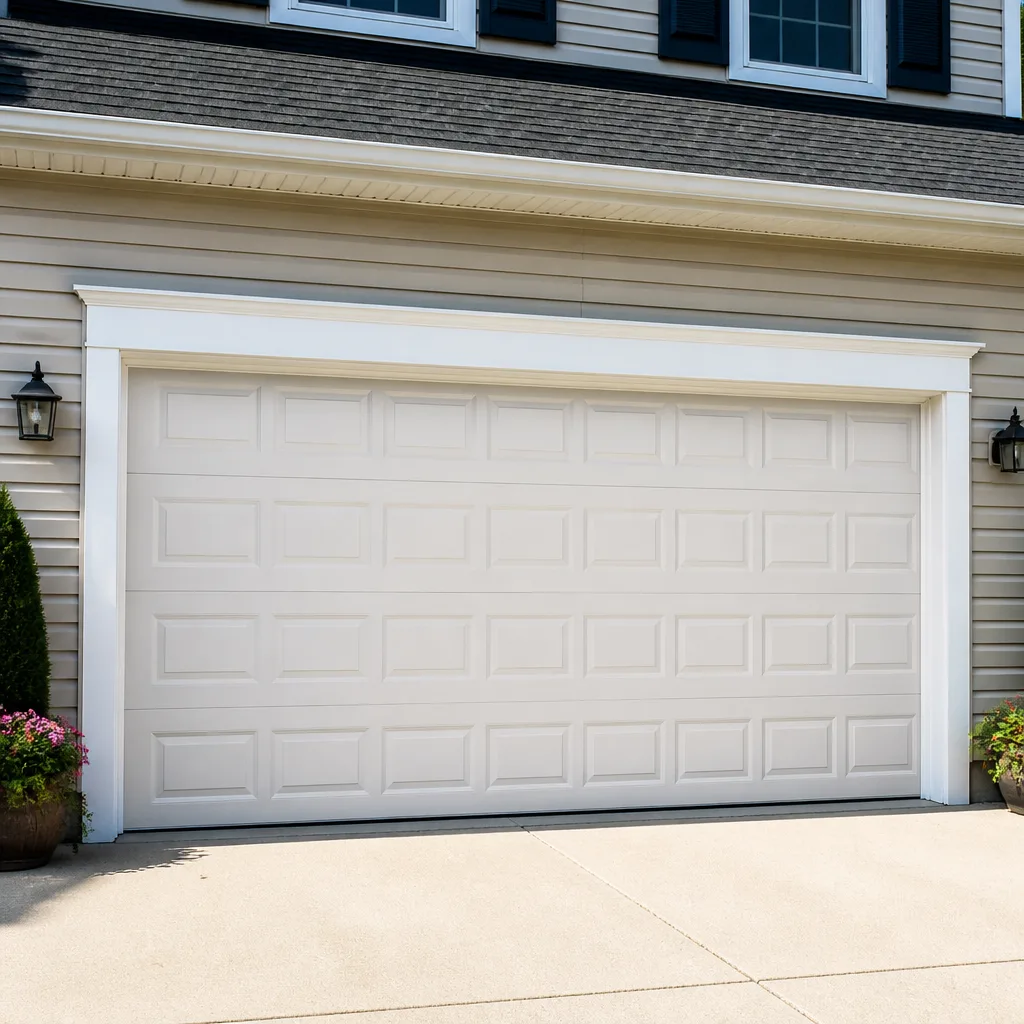 Raised-panel steel
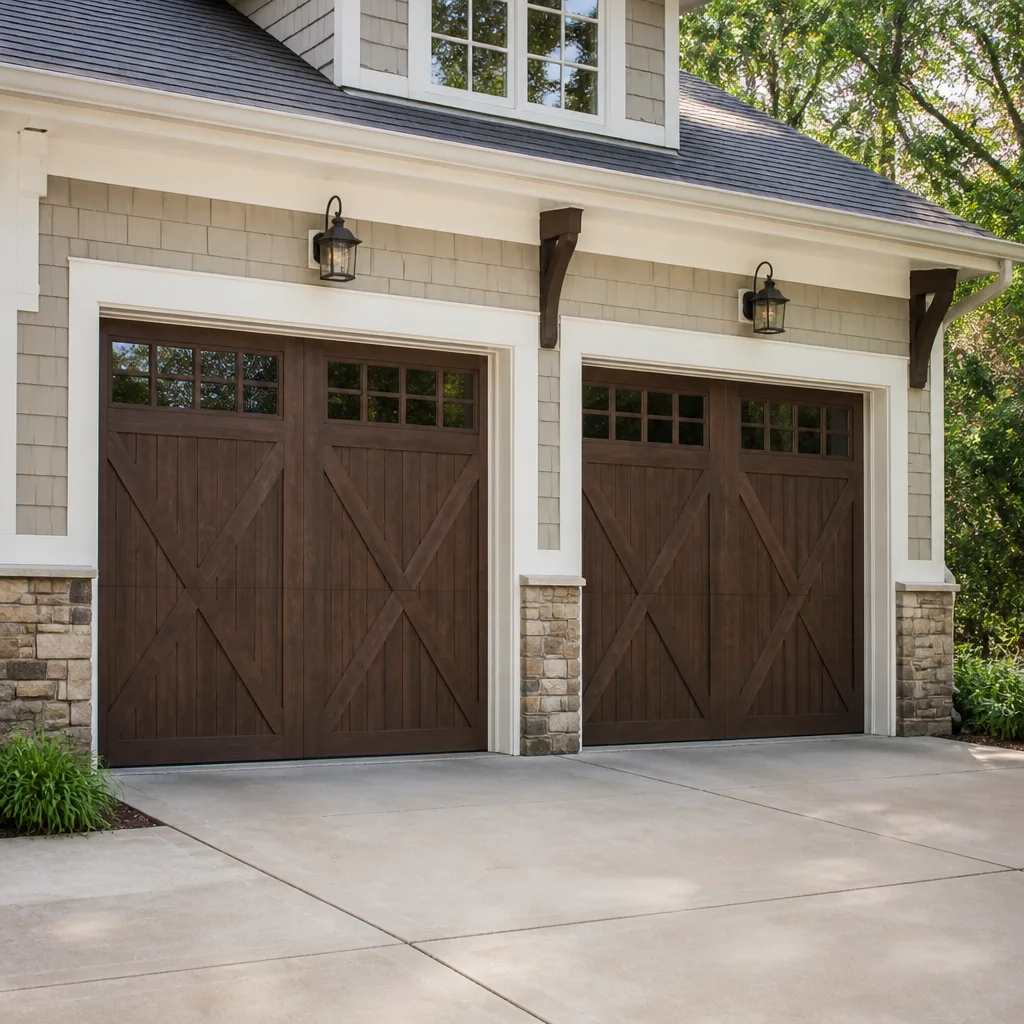 Carriage house
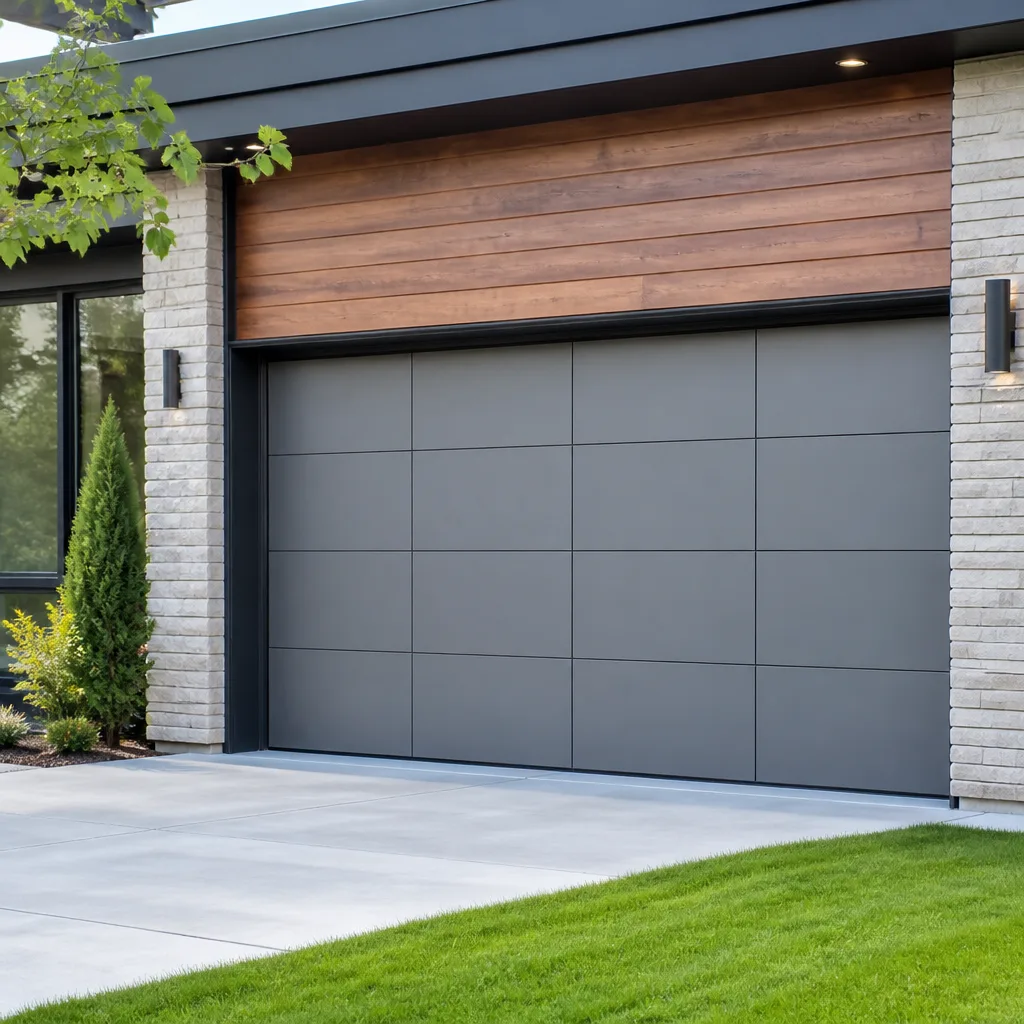 Modern flush
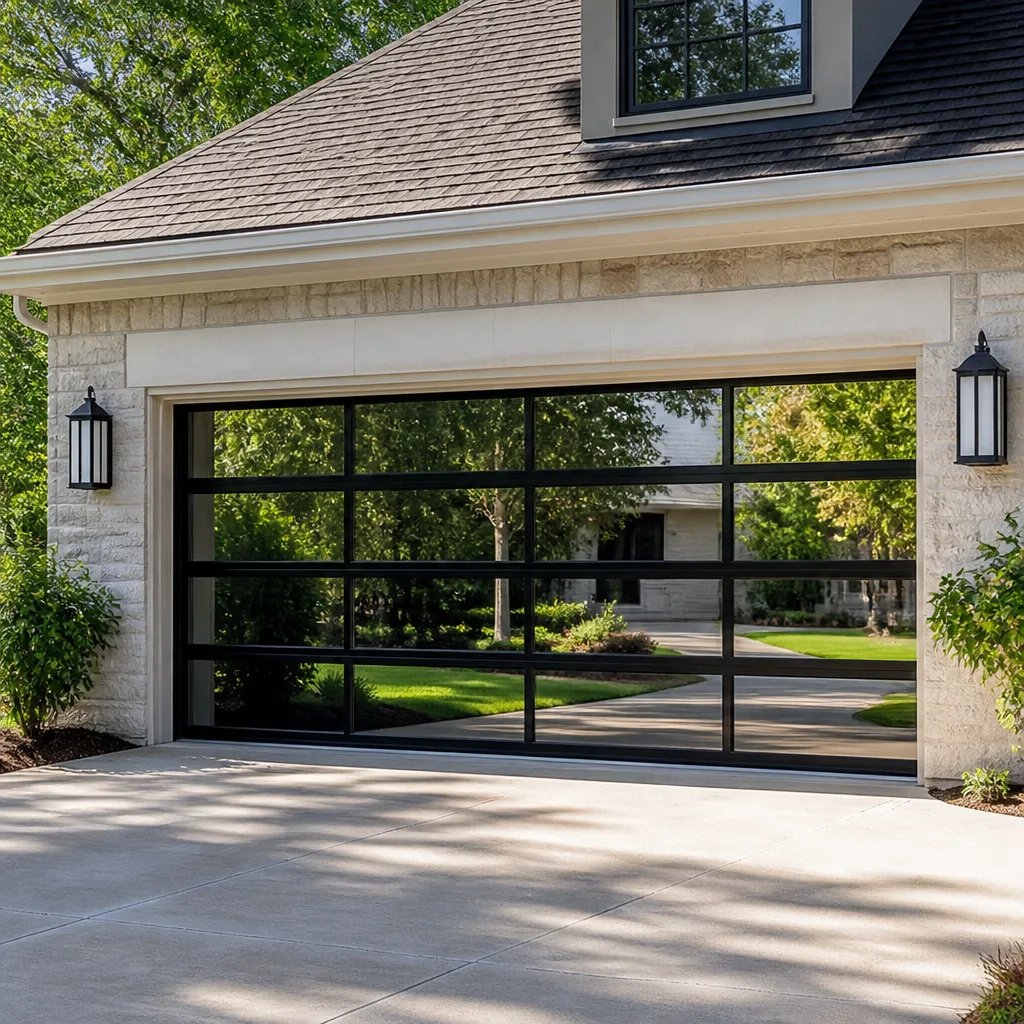 Full-view glass
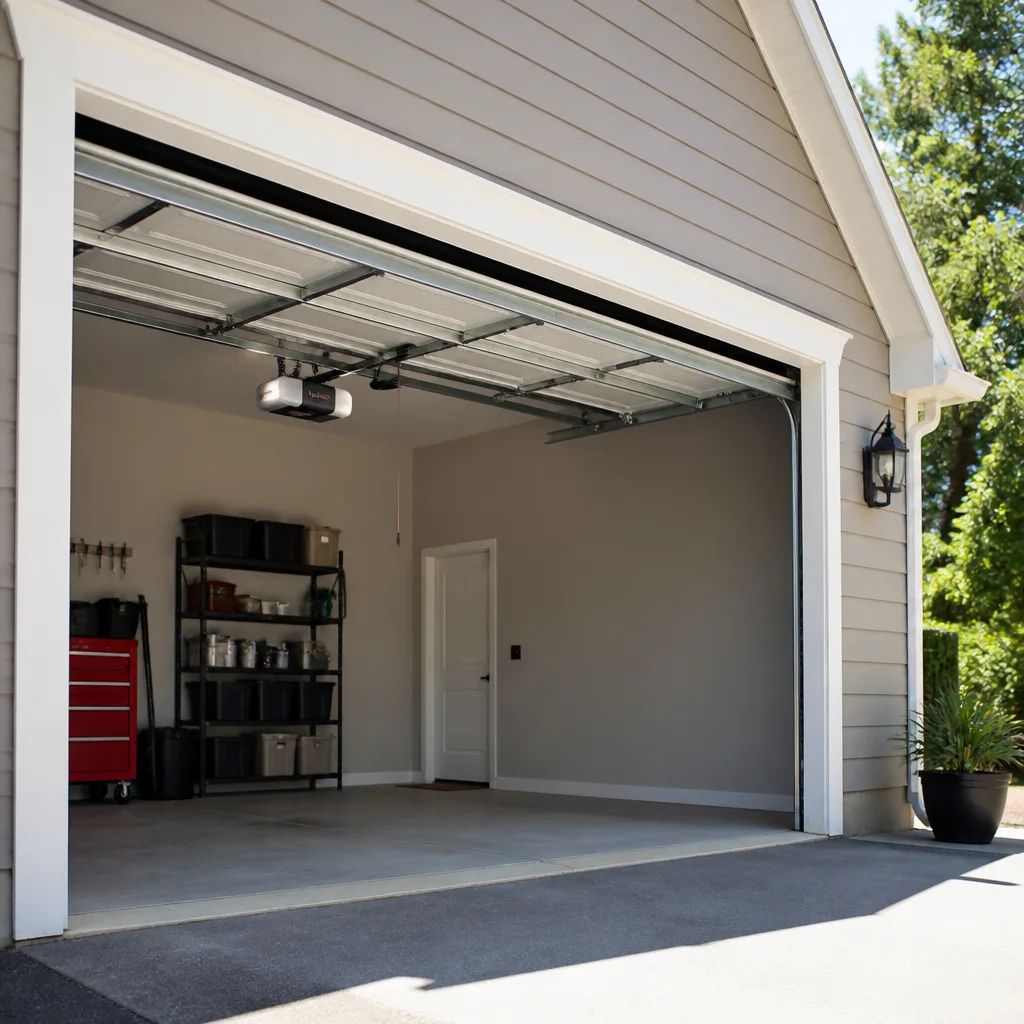 LiftMaster openers
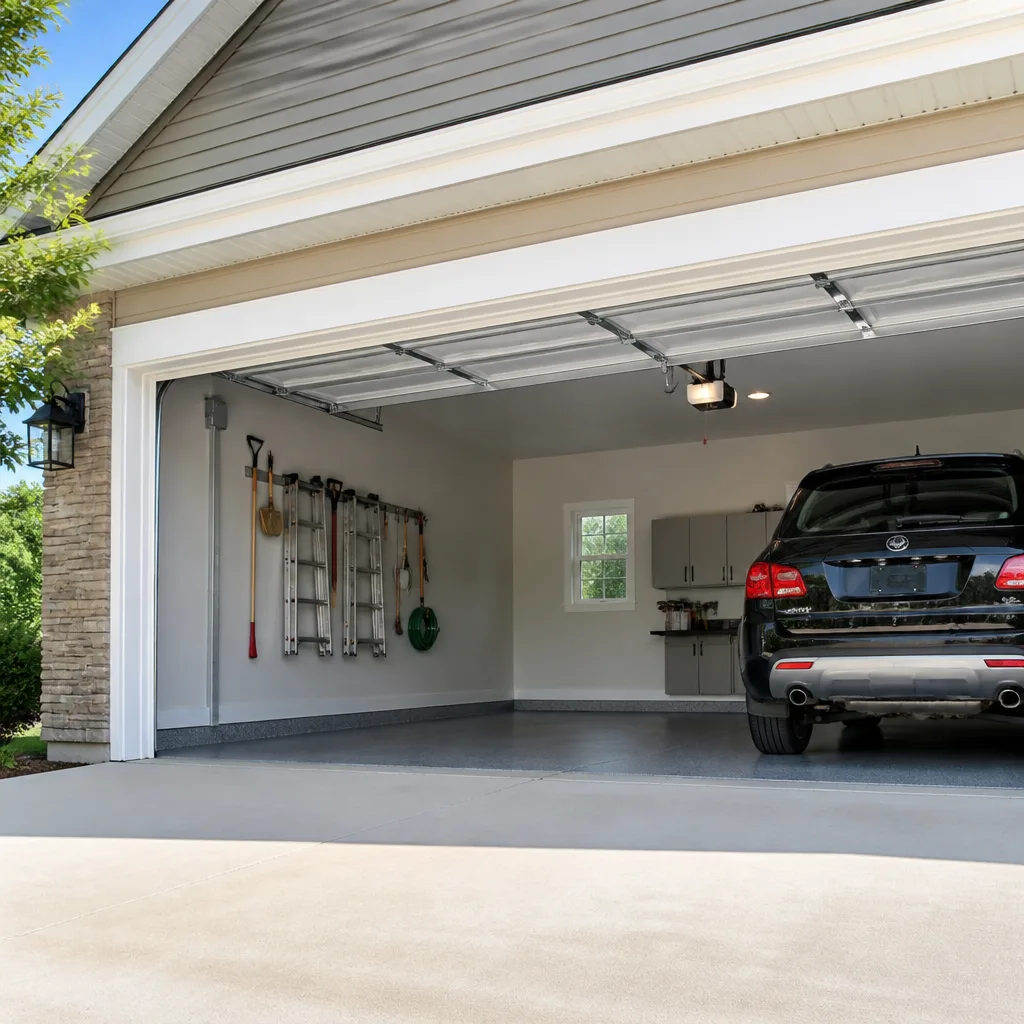 Chamberlain openers
Full 25-point door and opener safety check with every visit - springs, cables, rollers, tracks, and your LiftMaster or Chamberlain opener included
You get a price before we start. It does not change when the pro arrives.
Get your free estimateThe Complete Guide to Garage Doors in Evanston
Most garage door advice assumes a house built recently, with a straight driveway and a frame squared to modern standards. That assumption falls apart in Evanston. A large share of the city’s residential garages went up long before today’s door and opener standards existed, which means plenty of homeowners are running a current-model opener against a frame that was never engineered for it. The result is a door that binds, a motor that strains, and repair bills that keep coming back. This guide walks through what actually fails in Evanston garages, how the city’s alleys and lakefront weather change the equation, and how to tell repair from replacement before you spend a dime.
Quick Answer
Garage door work in Evanston comes down to three things: the age and construction of the frame, the clearance your alley-facing garage allows, and how Lake Michigan’s humidity has treated the springs and hinges. Older one-piece tilt-up doors usually need either a full hardware rebuild or replacement with a sectional door, while newer sectional doors often just need a spring, cable, or opener fix. A written estimate after an on-site look is the only reliable way to price your specific door, because no two Evanston garages are framed the same way.
Styles & brands we work with
- Raised-panel steel
- Carriage house
- Modern flush
- Full-view glass
- LiftMaster openers
- Chamberlain openers
Table of Contents
- Why Evanston’s Housing Stock Changes Everything
- Alley-Facing Garages and Their Hidden Constraints
- Sectional vs. One-Piece Tilt-Up: What You’ll Find in Older Evanston Homes
- How Lake Michigan Weather Ages Your Door
- Brand and Model Compatibility on Older Frames
- Historic Districts and Visible Door Changes
- Repair or Replace? A Decision Framework
- Choosing and Upgrading an Opener
Why Evanston’s Housing Stock Changes Everything
Evanston is not a subdivision built in one decade. It’s a layered city: Victorian and Craftsman homes from the late 1800s and early 1900s, brick two-flats from the mid-century, and infill construction from the last thirty years, all within a few blocks of each other. That mix matters because garage door problems are rarely about the door alone. They’re about the opening the door hangs in, the header above it, the floor it lands on, and the electrical circuit feeding the opener.
A garage built a century ago was framed for a wooden swing-out or a simple overhead door. The studs may not be plumb. The header may have settled. The concrete slab may slope toward the alley rather than away from it. When a homeowner adds a modern sectional door to that opening, the door itself is fine, but the track has to be shimmed, the springs sized differently, and the opener mounted with care because the ceiling joists weren’t placed for it.
What we see most often in Evanston:
- Doors hung in openings that are out of square by an inch or more, causing rollers to bind on one side.
- Springs sized for a lighter original door, now undersized for a heavier modern replacement.
- Opener rails mounted to ceiling joists that flex, which shortens motor life.
- Low headroom created by older framing, which limits which openers and track configurations fit.
The practical takeaway: in Evanston, always measure the opening and inspect the framing before ordering a door or an opener. A door that’s correct on paper can still be wrong for your garage.
Alley-Facing Garages and Their Hidden Constraints
A huge number of Evanston homes have garages that open onto an alley rather than a driveway. That single fact changes the job in ways most guides never mention. Alley garages tend to be shallower, tighter to the property line, and built with less clearance than a suburban garage with a wide apron in front.
Here’s what that means in practice:
- Headroom and backroom: A sectional door needs clear space above the opening for the horizontal track and behind the door for the panels to travel. Alley garages sometimes have neither. In those cases, a low-headroom track setup or a different door style is the only fit.
- Opener placement: Ceiling-mounted openers need a solid mounting point and enough clearance for the rail and motor. In a shallow alley garage, the motor can end up too close to the door’s travel path, which is why jackshaft-style openers (mounted on the wall beside the torsion bar) are often the better choice.
- Track alignment: With less room behind the door, the horizontal track runs shorter and the door has less tolerance for misalignment. A track that’s off by a fraction of an inch will bind on an alley door sooner than on a deep suburban one.
- Approach and security: Alley-facing doors are more exposed to foot traffic. A door that won’t close fully is both a security gap and a weather gap, which is one reason we treat a stuck alley door as urgent rather than a next-week appointment.
If your Evanston garage opens to an alley, tell the technician that when you call. It’s not a detail. It shapes which hardware and opener we recommend before anyone sets foot on the property.
Sectional vs. One-Piece Tilt-Up: What You’ll Find in Older Evanston Homes
Walk through Evanston’s older neighborhoods and you’ll see two fundamentally different door designs still in daily use. Knowing which one you have determines what repair means and whether replacement is the smarter path.
Sectional Doors
Sectional doors are made of horizontal panels that travel up along curved tracks and lay flat against the ceiling. They’re the modern standard because they use overhead space efficiently, seal well, and are easy to repair panel by panel.
What repair looks like on a sectional door:
- Individual panels can be replaced without touching the rest of the door.
- Springs, cables, rollers, and hinges are all accessible components.
- Openers are designed around the sectional door’s geometry, so upgrades are straightforward.
If your Evanston home has a sectional door that’s binding, sagging, or noisy, the fix is usually component-level and the door stays.
One-Piece Tilt-Up Doors
One-piece tilt-up doors (sometimes called canopy or pivot doors) swing out and up as a single slab. They’re common in pre-1980 Evanston homes, especially on detached garages. They worked well when they were built, but they have real limitations today.
What repair and replacement mean for a tilt-up:
- Fewer individual parts to replace, so a bent or rotted door often means full replacement rather than repair.
- They swing outward, which requires clear space in front, a problem on tight alley lots.
- They don’t seal as well, which lets in lakefront humidity and cold air.
- Most modern openers aren’t designed for them, so automating one is either impossible or requires a specific setup.
When a tilt-up door in Evanston reaches the end of its life, most homeowners move to a sectional door. That’s a bigger job than a repair, but it solves the sealing, clearance, and opener problems in one pass. We’ll give you a straight answer on which path makes sense for your door rather than pushing replacement by default.
How Lake Michigan Weather Ages Your Door
Evanston sits directly on Lake Michigan, and that proximity does real damage to garage door hardware over time. The constant moisture in the air, combined with the freeze-thaw cycle of a northern Illinois winter, wears on the components that matter most. This is not salt-air corrosion from an ocean; it’s lake humidity and seasonal temperature swings, and it shows up in predictable places.
Where the damage lands:
- Springs: Steel torsion and extension springs corrode in humid conditions. Rust pits the wire, creates stress points, and shortens spring life. A spring that should last is more likely to snap early in a damp lakefront garage.
- Hinges and rollers: Metal-on-metal joints dry out and seize. A hinge that won’t pivot becomes a worn roller and a noisy, jumpy door.
- Bottom seals: The rubber or vinyl seal along the bottom edge cracks and stiffens in cold, then fails to keep out water and pests. A failed seal lets moisture under the door, which is the last thing you want on a lakefront slab.
- Paint and finish: Steel doors on the lake side of a home pit and blister faster than doors sheltered inland.
The fix isn’t exotic. It’s regular lubrication of moving parts, inspection of springs for rust and pitting, and replacing bottom seals before they crumble. If you’re in Evanston and your garage backs toward the lake or sits in a low, damp spot, check your springs by eye every so often and call us if you see rust bloom or hear the door getting louder. Those are early warnings worth acting on.
Brand and Model Compatibility on Older Frames
When a homeowner upgrades an opener or a door, the fit between the new equipment and the old frame is where jobs go sideways. We’ve handled enough installs across Evanston to know that a brand that works beautifully in a modern garage can fight an older one.
The compatibility issues we run into most:
- Opener rail length versus actual headroom: Openers are built for a standard headroom. In an older Evanston garage with shallow framing, a long rail won’t fit, and the answer is either a low-headroom opener or a wall-mounted jackshaft design.
- Door weight and spring sizing: A modern Clopay or Amarr sectional door is typically heavier than the wooden door it replaced. The springs must be sized for the new weight, not the old one. Getting this wrong is a safety issue, not just a performance one.
- Safety sensor placement: Modern openers require photo-eye sensors at the floor. On older frames with irregular flooring or a low header, placement takes planning.
- Old Craftsman and Wayne Dalton openers: We service these regularly, and parts availability varies with model year. Knowing which models are still serviceable versus which are due for replacement saves you from throwing money at a dead motor.
- Track profile: Older doors may use a track profile that new panels don’t match cleanly. Matching the door to the existing track, or replacing both, is a decision best made on site.
We work on LiftMaster, Chamberlain, Genie, Clopay, Amarr, Wayne Dalton, Craftsman, and Raynor, so we’re not improvising with unfamiliar parts on your brand. For garage door opener repair, that brand familiarity is often what separates a quick fix from a return visit.
Historic Districts and Visible Door Changes
Evanston has historic district designations that can affect what you’re allowed to change on a visible part of your home. A garage door facing an alley may be treated differently than one facing the street, and even a non-landmark property within a historic district can face review of exterior changes. This is the part of the process no generic guide covers, and it catches homeowners off guard.
How to handle it:
- Check before you buy. Confirm whether your property sits within a historic district or carries a local landmark designation. The city’s planning or building department is the authority on this.
- Ask what counts as visible. A door that only shows to an alley may have more latitude than one visible from the street. Get that clarified in writing.
- Pull the permit if one is required. Most cities require a permit for a full door replacement, so ask your city’s building department what applies to your address.
- Match the design language. If review is required, choosing a door that fits the architectural character of the home makes approval smoother.
We can’t make the city’s rules for you, and we won’t pretend to know your specific district’s requirements. What we can do is help you understand what door styles suit the home and make sure the installation you get matches what was approved. If a permit requires a specific design, we install to it.
Repair or Replace? A Decision Framework
The most common question we get is whether a door can be fixed or has to be replaced. Here’s how to think it through in order.
- Is the door itself structurally sound? Panels that are cracked, rotted, or bent beyond straightening usually point toward replacement. Solid panels point toward repair.
- Is the hardware failing or the door? A snapped spring or a frayed cable is a component problem. New springs and cables restore a solid door to full function.
- Is the frame square and sound? If the opening is out of true or the header is failing, repairs on the door will keep failing. That’s a framing job first.
- Are you chasing the same repair repeatedly? A door that needs the same fix every season is telling you something is wrong at the system level. That’s when replacement starts to make sense.
- Does the door match your opener and frame? A door that fights its opener will wear both out faster. If compatibility has always been a struggle, a fresh matched setup saves money over time.
For our part, we don’t replace doors that can be fixed. The garage door repair path is the right answer more often than not, and the written estimate will make clear which path applies to your door and why.
Choosing and Upgrading an Opener
The opener is the other half of the system, and in Evanston it’s where older frames and modern equipment collide. A good opener matched to your door runs quietly for years. A mismatched one strains the door, wears out springs, and annoys everyone in the house.
What to consider when upgrading:
- Match the opener to door weight. Horsepower and lifting capacity need to be right for a modern sectional door, which runs heavier than the older doors Evanston garages were built around.
- Choose the mounting style the garage allows. Ceiling-mounted for standard headroom, wall-mounted jackshaft for low-headroom or shallow alley garages.
- Confirm you have a functional safety reverse. Photo-eye sensors and the safety reverse feature are non-negotiable on any opener.
- Account for the electrical circuit. Older garages sometimes run the opener on a shared or marginal circuit. It’s worth checking before install.
One call covers the door and the opener here, which matters when the two are intertwined. You’re not referred to a second company for the motor after we fix the door.
Common Mistakes to Avoid
- Forcing a binding door by hand. If the door won’t move smoothly, stop pulling on it. The binding usually traces to a spring, cable, or track problem, and forcing it can turn a small repair into a dangerous one.
- Replacing an opener to fix a door problem. A door that binds or jumps is almost always a door issue, not the motor. Replacing the opener before diagnosing the door wastes money and leaves the real problem in place.
- Ignoring rust on spring coils. In Evanston’s lake-humid air, rust bloom on a spring is an early warning. Waiting until it fails costs more and creates a safety hazard.
- Buying a door before measuring the opening. Older Evanston garages are frequently out of square. Ordering a door from a catalog before checking the actual opening is one of the most common and expensive errors we see.
- Attempting spring repair yourself. Torsion and extension springs are under extreme tension. Manufacturers warn against DIY work for good reason, and this is not a job to learn on.
- Overlooking a historic district before ordering. A door chosen without checking district requirements can end up as a door you can’t install.
- Assuming an alley garage takes standard parts. Old alley garages in Evanston often need low-headroom tracks and wall-mounted openers. Planning for it up front saves a second visit.
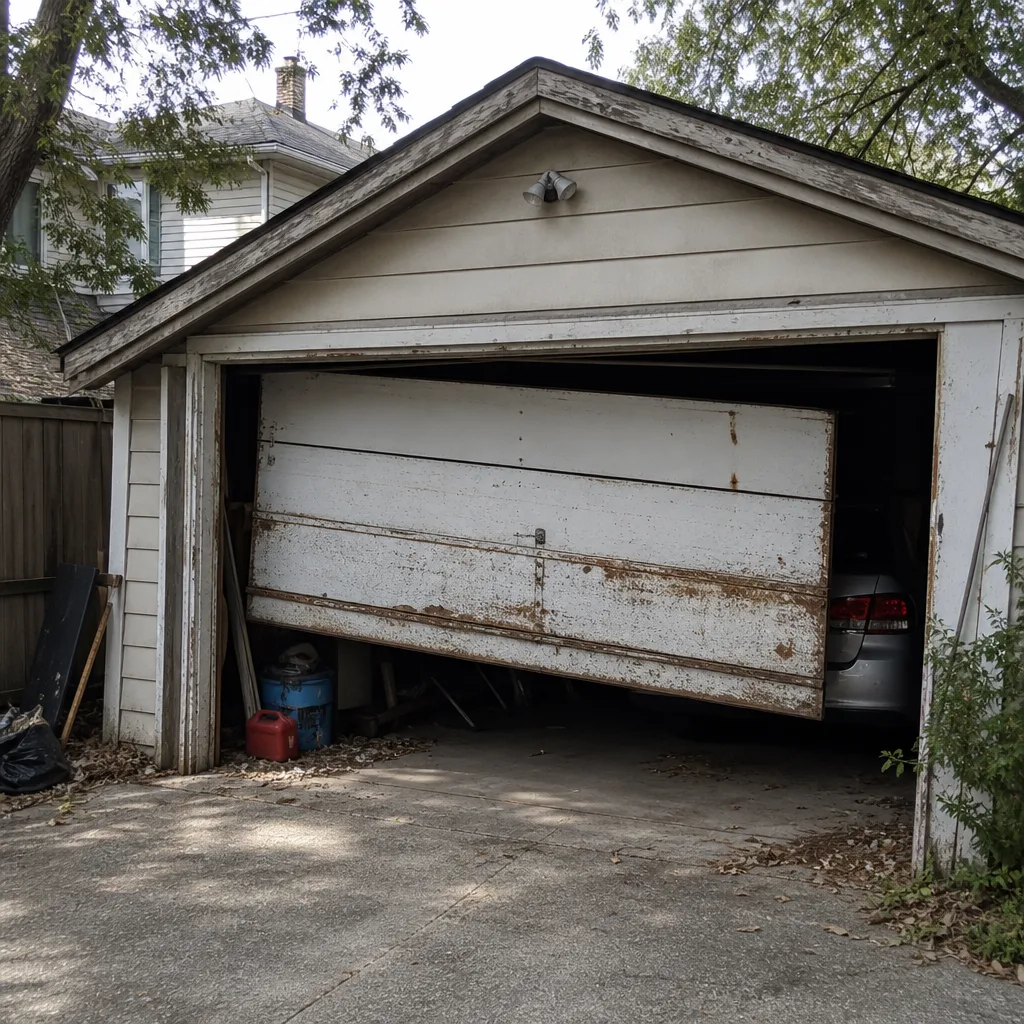
See the difference
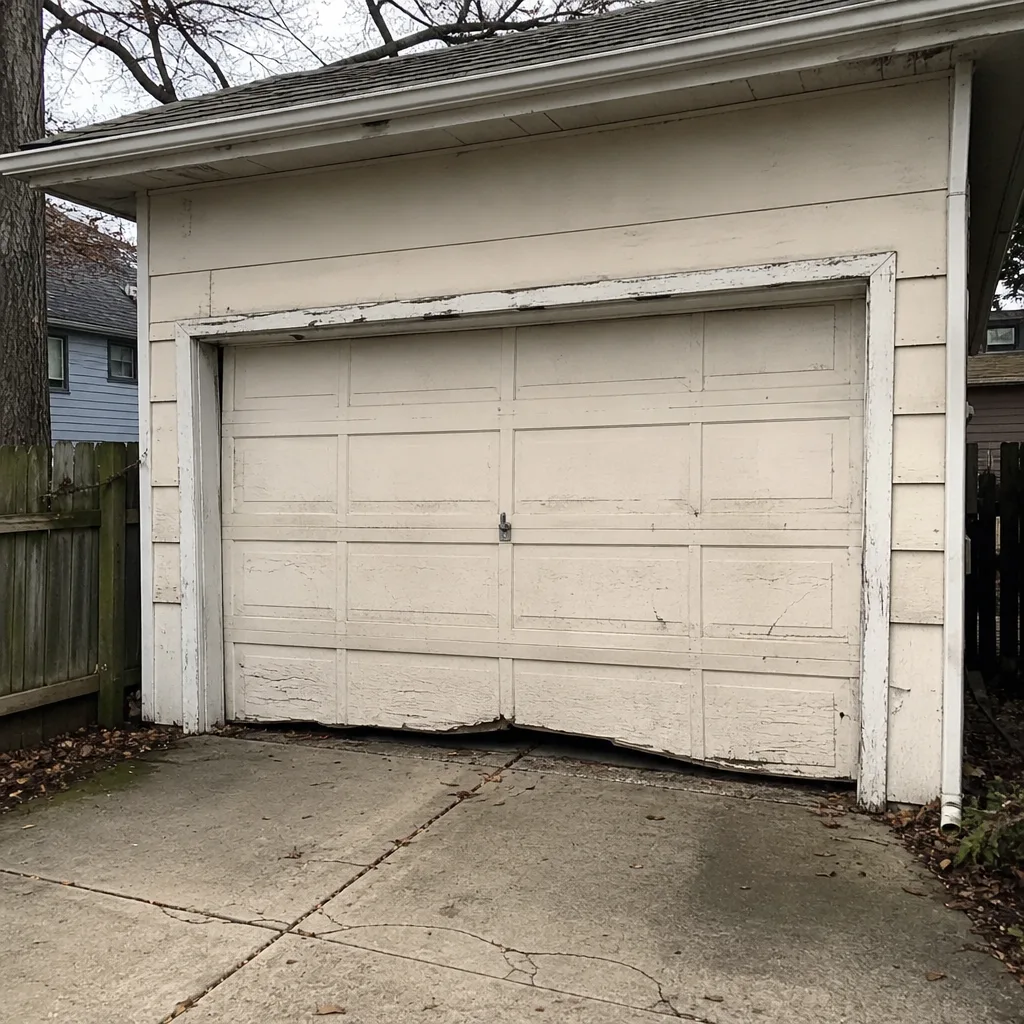 Before
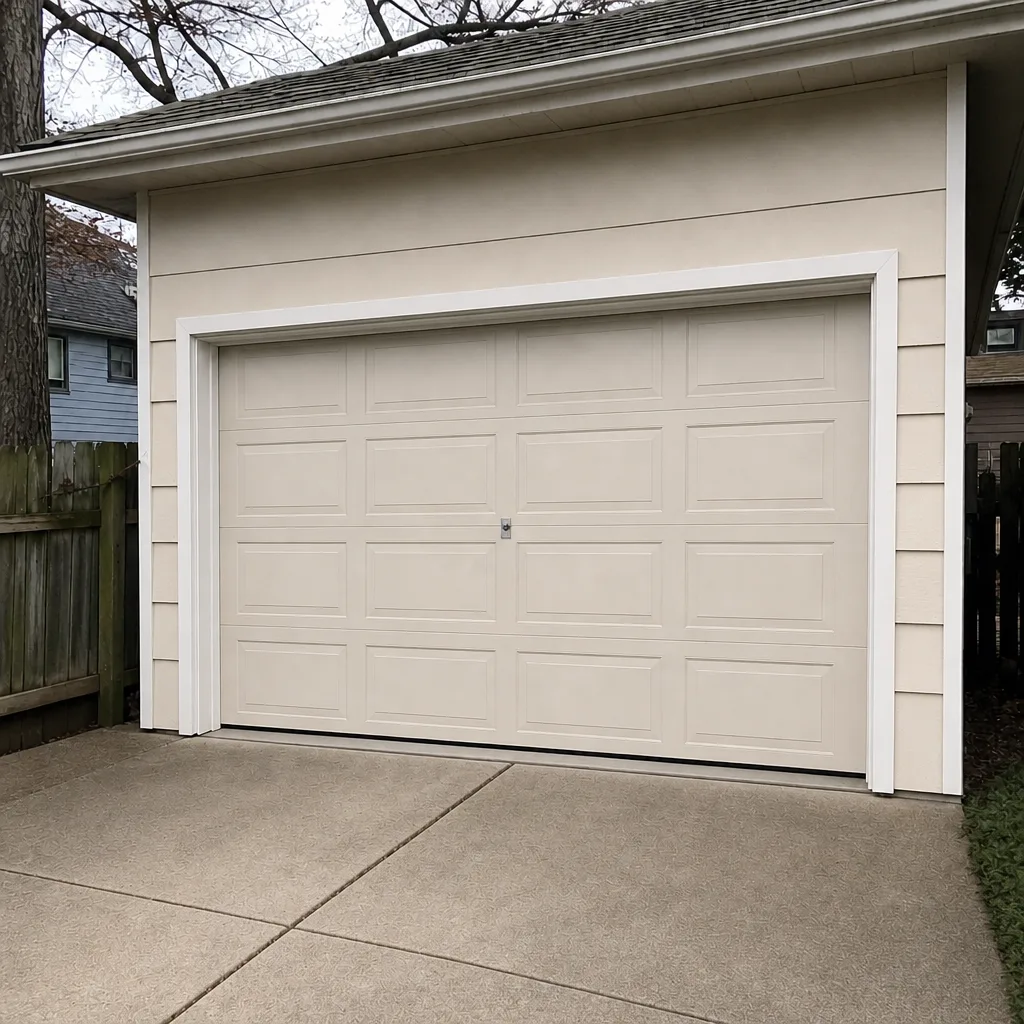 After
 Before
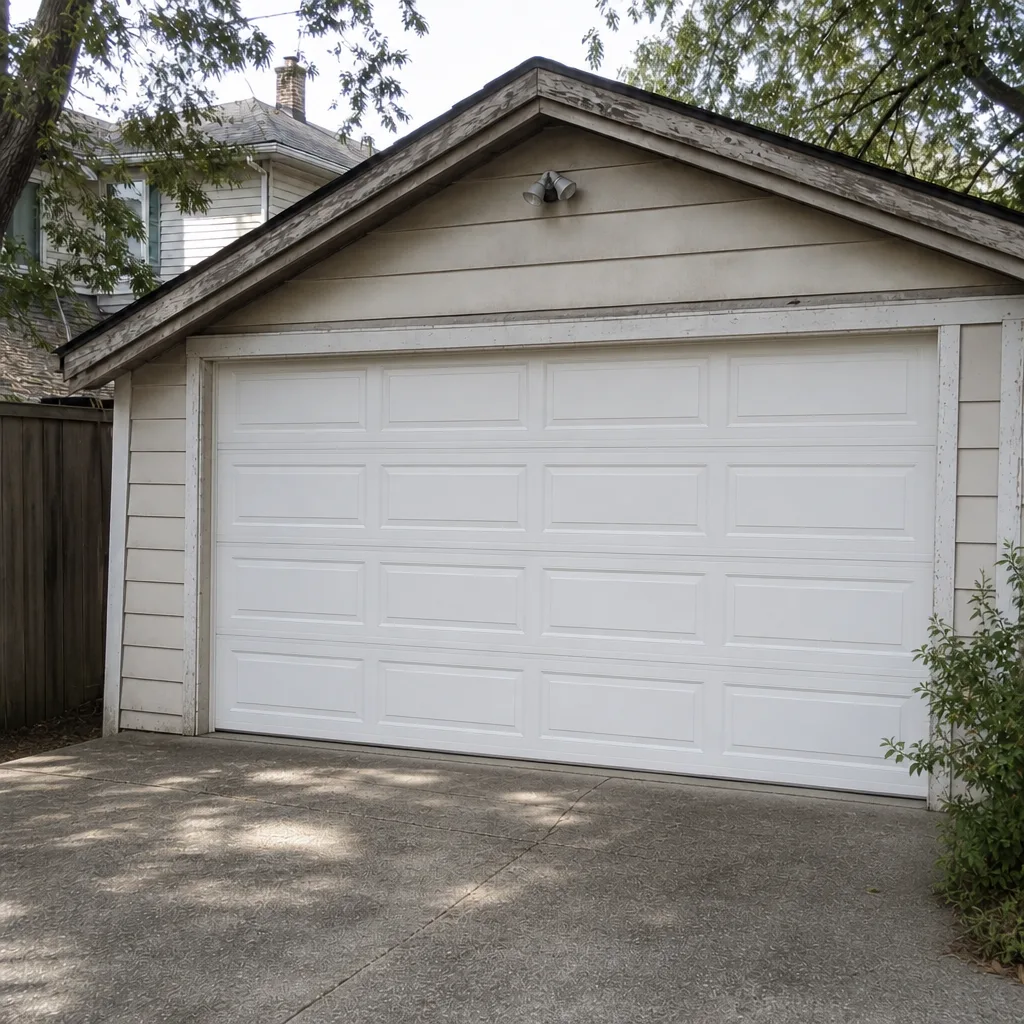 After
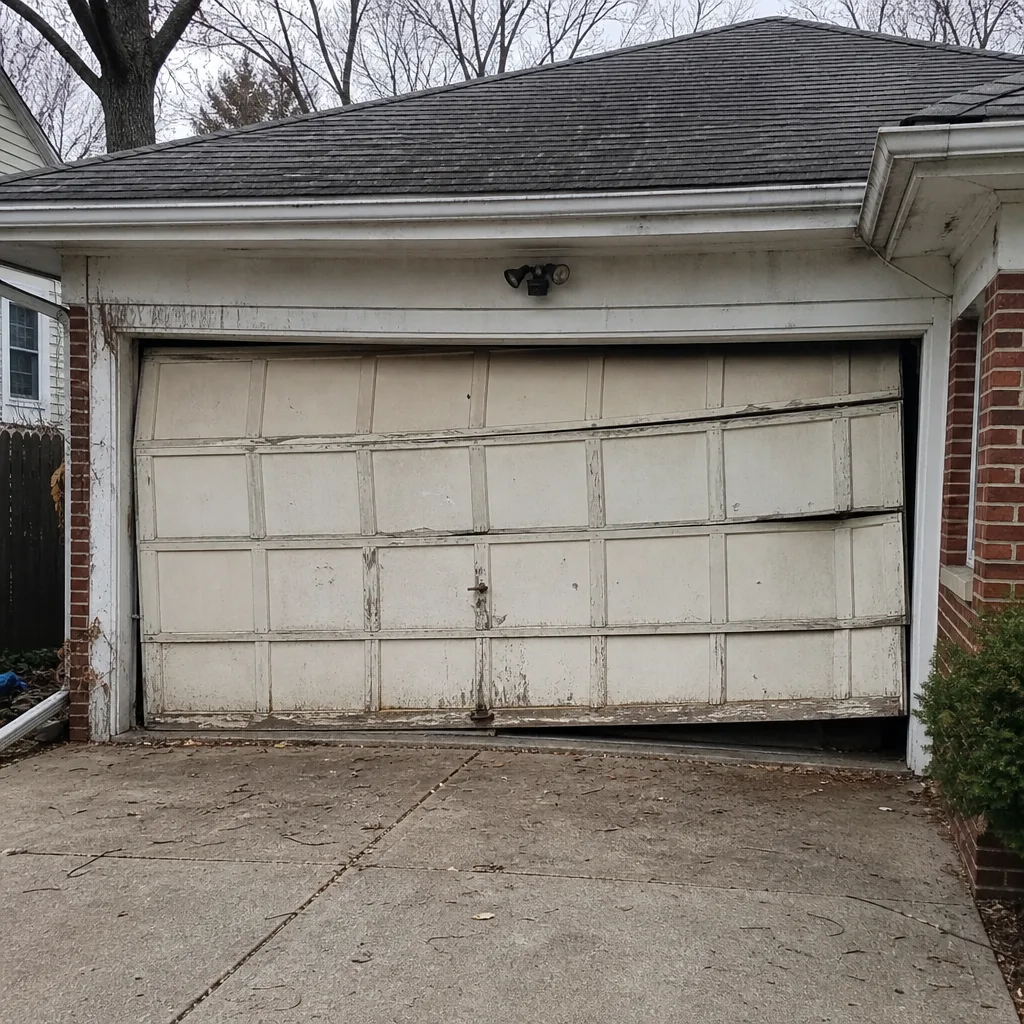 Before
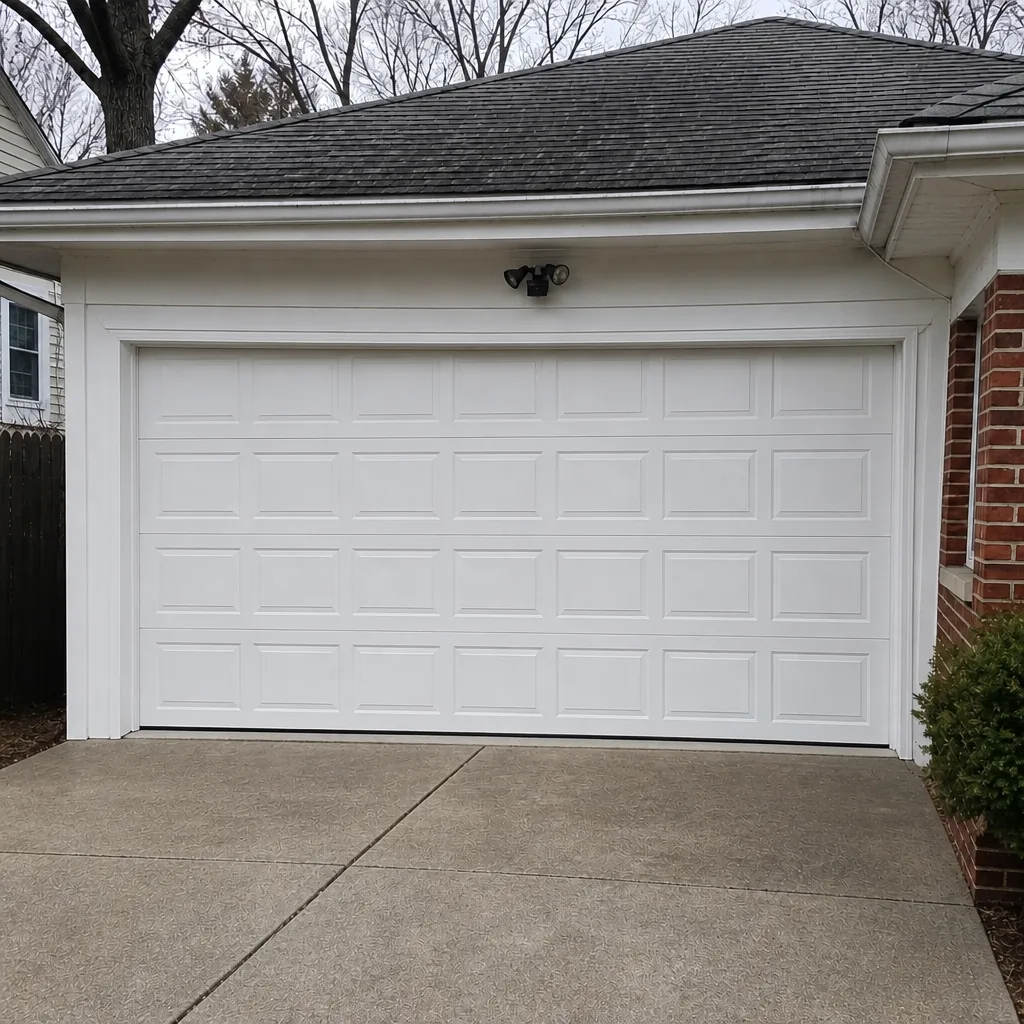 After
When to Call a Professional
Call us when a spring has snapped and the door won’t lift, when a door is off its track, or when a cable has frayed or come loose. Call when an opener runs but the door doesn’t move, or when the door reverses on its own or stops partway. Call if a panel is cracked, the door has started binding, or you’ve noticed a loosening hinge or a failing bottom seal. And call if you’re uncertain what the problem is: a five-minute conversation often tells us whether it’s a component fix or a bigger job. Evanston Garage Door Repair Co offers free estimates in Evanston, and we answer 24/7. Call (877) 492-2506. Fast dispatch from 7am to 7pm, Sunday through Friday. For a full one-piece tilt-up or an intended conversion, we’ll start with a free measure and a written price.
Frequently Asked Questions
Spring repair is priced per job after an on-site look, because the cost depends on spring type, door weight, and whether a single spring or a matched pair is being replaced. A matched pair is usually replaced together, which costs more than a single spring. The written estimate sets the final price, and we quote and agree it before any work starts. Call (877) 492-2506 for a free estimate.
We handle same-day service for stuck or broken doors, and we answer 24/7 so you can call at any point to get scheduled. Fast dispatch runs from 7am to 7pm, Sunday through Friday, and we’re closed Saturday. A call outside dispatch hours is booked into the next opening. Call (877) 492-2506 for the fastest answer on your door.
No. The written estimate we agree on before any work starts is the price for the job. If we discover something during the work that genuinely changes the scope, we stop and discuss it with you before continuing. We don’t pad estimates, and we don’t add charges after the fact. Call (877) 492-2506 for a free estimate.
The local professionals we connect you with are licensed and insured as their state requires. Our technicians have up to 9 years of experience, and they work across LiftMaster, Chamberlain, Genie, Clopay, Amarr, Wayne Dalton, Craftsman, and Raynor equipment. Call (877) 492-2506 to talk through your door and get a free estimate.
Yes, in several ways. Alley-facing Evanston garages often have low headroom and less clearance behind the door, which affects track configuration and opener placement. In many cases a wall-mounted jackshaft opener fits where a ceiling-mounted one won’t. Tell us it’s an alley garage when you call, and we’ll plan accordingly. Call (877) 492-2506.
Often, yes. On a sectional door, a single damaged panel can usually be replaced without touching the rest of the door, provided the panel model is still available. On a one-piece tilt-up door, single-panel replacement generally isn’t an option, so repair often means replacement. Call (877) 492-2506 and we’ll tell you which applies to your door.
The Bottom Line
Garage doors in Evanston are not a general topic. The city’s pre-war and mid-century housing, its alleys, its lake-humid climate, and its historic districts all shape what a repair, replacement, or opener upgrade actually involves. The short version: measure before you buy, treat rust and spring wear as warnings, choose hardware that fits the frame rather than assuming standard parts work, and check for historic review before ordering a new door. When the door itself is sound, repair makes sense. When the frame, seal, and compatibility fight you at every turn, replacement solves more than the door. The team at Evanston Garage Door Repair Co is the one call for the door and the opener together, with a written price agreed before the work starts. For spring work specifically, our garage door spring repair covers the most safety-critical part of the system.
Whether you need a spring, a cable, an opener, or a whole new door, call (877) 492-2506 for a free estimate. We answer 24/7, with fast dispatch from 7am to 7pm, Sunday through Friday.
Written by the team at Evanston Garage Door Repair Co.